

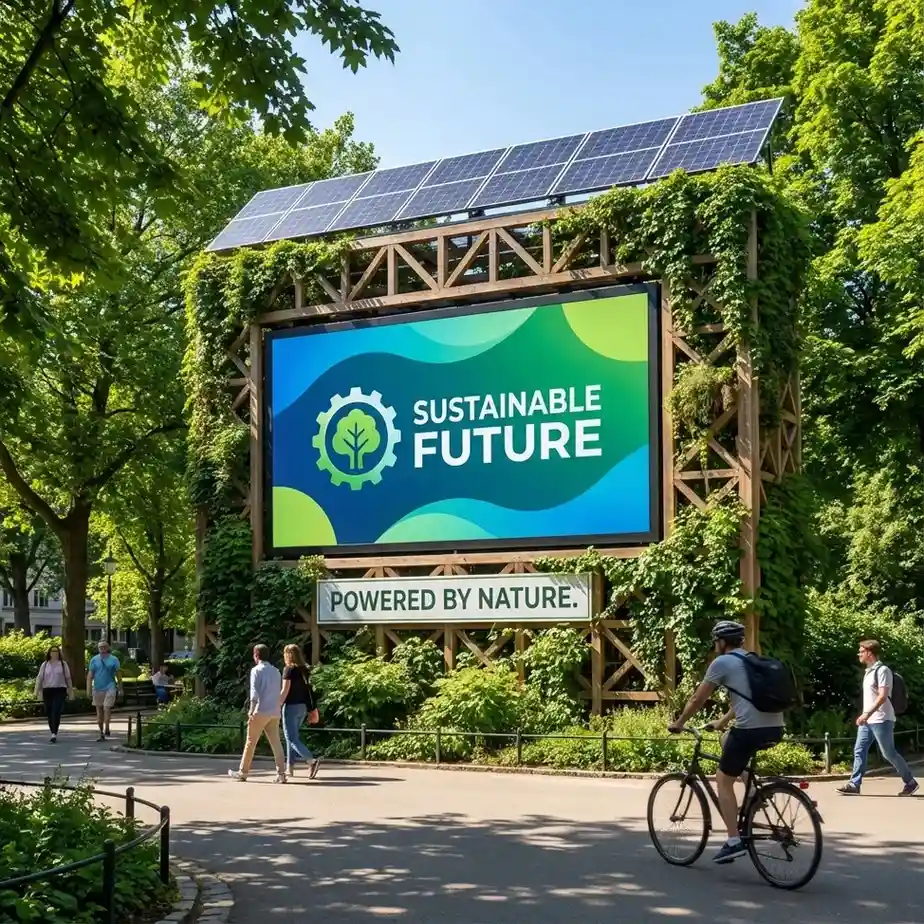
Sustainability in OOH: How Tech is Making Outdoor Ads Greener
As brands increasingly commit to ESG goals and consumers demand environmental responsibility, every media channel is facing scrutiny.
Outdoor advertising is no exception.
The good news? Technology is transforming OOH from a waste-heavy medium to one of the more sustainable advertising options available.
At Adcentra.ai, we're helping advertisers reduce environmental impact while improving campaign effectiveness - proving that sustainability and performance can go together.
🌍 The Environmental Challenge of Traditional OOH
Traditional static outdoor advertising has significant environmental costs:
The Problem with Static Billboards:
| Issue | Impact |
|---|---|
| Vinyl Printing | PVC-based materials are non-recyclable and petroleum-derived |
| Reprints | Campaign changes require entirely new prints |
| Installation | Vehicles, crews, and physical labor for every change |
| Disposal | Thousands of tons of vinyl end up in landfills annually |
| Lighting | Static billboards require external lighting 12+ hours daily |
Estimated impact: A single national static campaign can generate 5-10 tons of vinyl waste.
💡 How Digital OOH Improves Sustainability
Digital screens fundamentally change the environmental equation:
| Factor | Static | Digital |
|---|---|---|
| Print Waste | High | Zero |
| Campaign Changes | Physical replacement | Remote digital update |
| Energy Use | External lighting | LED screens (improving efficiency) |
| Longevity | Short-term materials | 10+ year screen lifespan |
| Optimization | Fixed display | Smart scheduling reduces unnecessary plays |
A single digital screen can replace hundreds of vinyl prints over its lifetime.
⚡ Smart Technology = Less Waste
Beyond the shift from static to digital, AI and automation add another layer of sustainability:
1️⃣ Precision Targeting Reduces Waste
Instead of blanket coverage, AI helps advertisers target only relevant locations and times.
Traditional approach: Book 100 screens across a city for 24/7 display.
Smart approach: Book 40 screens in high-impact zones, only during peak hours.
Result: Same reach, 60% less energy consumption.
2️⃣ Dynamic Scheduling
Not all hours are created equal. AI-powered scheduling means:
- Screens dim during low-traffic periods
- Ads only display when audience is present
- Energy consumption optimized based on real-time footfall
3️⃣ Creative Efficiency
Digital campaigns allow unlimited creative changes without any physical production:
- Test multiple versions to find what works
- Update messaging instantly
- No reprints, reinstallations, or waste
📊 Quantifying the Environmental Benefit
Let's compare a hypothetical 4-week national campaign:
| Factor | Static Campaign | Digital Campaign |
|---|---|---|
| Screens/Sites | 200 | 150 |
| Production Materials | 200 vinyl prints | 0 |
| Material Weight | ~2,000 kg | 0 |
| Installation Trips | 200 | 0 |
| Vehicle Emissions | ~3 tons CO2 | 0 |
| Waste Generated | 2,000 kg vinyl | 0 |
| Energy Use | External lighting | LED (offsetable with renewables) |
Total potential reduction: 70-80% lower environmental impact with smart digital planning.
🌱 Sustainable Practices with Adcentra.ai
Adcentra.ai builds sustainability into campaign planning:
🎯 Smart Inventory Selection
Our AI identifies high-impact locations, reducing the number of screens needed to achieve campaign goals.
⏰ Optimized Scheduling
Book only the time slots that matter - peak hours, relevant dayparts - avoiding wasteful 24/7 display.
📊 Efficiency Reporting
Track not just impressions, but impressions per kWh - understanding the energy efficiency of your campaigns.
🔄 Instant Updates
Creative changes are instant and remote - no production, no transport, no waste.
🏢 Industry Progress on Green OOH
The outdoor advertising industry is making meaningful strides:
What Media Owners Are Doing:
| Initiative | Example |
|---|---|
| Renewable Energy | Solar-powered screens and wind offsets |
| LED Upgrades | 50% more efficient than older digital screens |
| Auto-Dimming | Screens adjust brightness based on ambient light |
| Sustainable Materials | Recycled and recyclable screen housings |
| E-Waste Programs | Proper disposal and recycling of old equipment |
What Advertisers Can Do:
| Action | Impact |
|---|---|
| Choose digital over static | Eliminate vinyl waste entirely |
| Optimize schedules | Reduce unnecessary energy use |
| Use fewer, higher-impact locations | Quality over quantity |
| Ask for sustainability reporting | Drive industry accountability |
| Include sustainability in briefs | Signal demand for green options |
💡 Case Study: Sustainable Fashion Campaign
Client: A sustainable fashion brand launching in India.
Challenge: Brand values required every touchpoint to align with sustainability principles.
Solution:
- 100% digital OOH campaign - zero vinyl production
- AI-optimized to 60 screens vs. originally planned 100
- Scheduling focused on peak shopping hours only
- Partnered with media owners using solar-powered screens where available
Results:
| Metric | Outcome |
|---|---|
| Reach | 12 million impressions (target: 10 million) |
| Print Waste | 0 kg (vs. estimated 800 kg static alternative) |
| CO2 Reduction | ~2.5 tons avoided |
| Campaign Efficiency | 40% under budget |
| Brand Alignment | Strong positive feedback on sustainability commitment |
The brand used the environmental data in PR and marketing, amplifying the sustainability message.
🔮 The Future: Carbon-Neutral OOH
The industry is moving toward fully sustainable outdoor advertising:
| Innovation | Timeline |
|---|---|
| Solar-Powered Screens | Expanding now |
| Carbon Offset Integration | Available today |
| Recycled Screen Materials | Growing adoption |
| AI-Optimized Efficiency | Available today |
| Industry Carbon Standards | Developing |
Within 5-10 years, carbon-neutral outdoor campaigns will be the norm, not the exception.
🌿 Making Sustainable Choices
Every campaign decision has an environmental impact. Here's how to minimize yours:
✅ Do This:
- Choose digital over static whenever possible
- Use AI planning to optimize screen selection
- Schedule for peak hours, not 24/7
- Ask media owners about their sustainability practices
- Include environmental metrics in campaign reporting
❌ Avoid This:
- Blanket city coverage without targeting
- Static prints for short-duration campaigns
- Multiple reprints due to creative changes
- Ignoring energy efficiency in screen selection
🏁 Conclusion
Outdoor advertising is undergoing a green revolution.
The combination of:
- 📺 Digital screens eliminating print waste
- 🤖 AI planning reducing unnecessary displays
- ⚡ Smart scheduling optimizing energy use
- 🌞 Renewable energy powering screen networks
...is making OOH one of the most sustainable media channels available.
With Adcentra.ai, you can run effective campaigns while minimizing environmental impact - proving that good advertising and good citizenship aren't mutually exclusive.
👉 Ready to plan a sustainable campaign?
Visit Adcentra.ai and discover greener outdoor advertising.
💬 FAQs
1️⃣ Is digital OOH really more sustainable than static?
Yes. Digital eliminates vinyl waste, reduces transport emissions from creative changes, and modern LED screens are increasingly energy-efficient.
2️⃣ How can AI make outdoor advertising greener?
AI optimizes screen selection and scheduling, ensuring ads only display where and when they'll have impact - reducing the total energy footprint of campaigns.
3️⃣ Can I offset the carbon footprint of my OOH campaign?
Yes. Many media owners and platforms now offer carbon offset options, and you can calculate campaign emissions using emerging industry standards.
Published by Adcentra.ai - Building the future of intelligent outdoor advertising in India.