

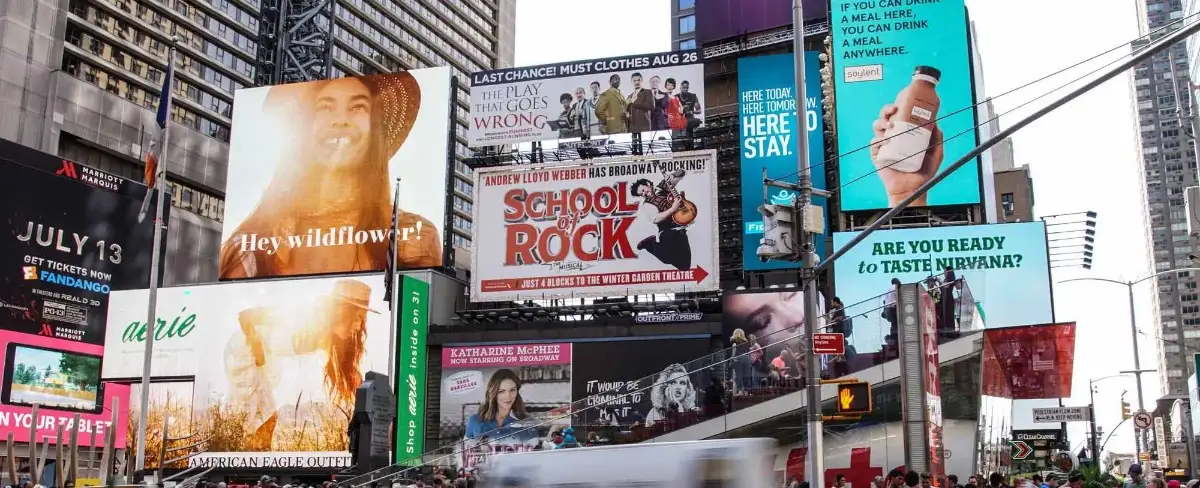
The Role of Creatives in OOH: Designing Ads That Stop Traffic
You can book the best locations in the city.
You can optimize timing and targeting perfectly.
But if your creative doesn't capture attention, none of it matters.
In outdoor advertising, creative is the make-or-break factor. You have seconds - sometimes fractions of a second - to make an impression.
This guide covers everything you need to know about designing OOH creative that truly stops traffic.
⏱️ The OOH Attention Challenge
The Reality of OOH Viewing
| Environment | Typical Viewing Time | Speed of Exposure |
|---|---|---|
| Highway Billboard | 1-3 seconds | 60-100 km/h |
| Urban Street | 3-5 seconds | Walking/slow traffic |
| Bus Shelter | 5-10 seconds | Waiting pedestrians |
| Metro Platform | 10-30 seconds | Waiting commuters |
| Mall Digital | 5-15 seconds | Shopping visitors |
The rule: Design for the shortest possible attention window, then benefit when you get more.
🎨 The Core Principles of OOH Creative
1️⃣ Simplicity is Everything
| Guideline | Why It Matters |
|---|---|
| Maximum 7 words | More words = less comprehension |
| One single message | Multiple messages = no message |
| Clear visual hierarchy | Eye should flow instantly |
| Minimal elements | Clutter kills comprehension |
Test: If you can't understand the ad in 3 seconds, simplify it.
2️⃣ Bold Visibility
| Element | Recommendation |
|---|---|
| Text Size | Readable from maximum viewing distance |
| Contrast | Dark on light, light on dark |
| Colors | High saturation, limited palette |
| White Space | Don't fill every inch |
Rule of thumb: If you squint and still understand the ad, it's designed right.
3️⃣ Brand First
| Principle | Application |
|---|---|
| Logo prominence | Visible even in peripheral vision |
| Brand colors | Consistent with identity |
| Visual language | Recognizable brand style |
| Position | Typically lower right or centered |
Goal: Even if the message isn't read, the brand should register.
🖼️ Format-Specific Guidelines
Billboard (Large Format)
| Aspect | Recommendation |
|---|---|
| Image | Single hero visual, not collage |
| Text | 5-7 words maximum |
| Layout | Landscape orientation |
| CTA | Simple (brand/URL/location) |
Digital Screen
| Aspect | Recommendation |
|---|---|
| Motion | Subtle animation (not distracting) |
| Duration | 10-15 second loops |
| Transitions | Clean cuts, not elaborate effects |
| Text on screen | Sufficient dwell time per message |
Transit (Bus/Metro)
| Location | Creative Approach |
|---|---|
| Exterior | High impact, few words |
| Interior | More detail OK (seated audience) |
| Platform | Balance of impact and information |
Street Furniture (Bus Shelter, etc.)
| Aspect | Recommendation |
|---|---|
| Viewing distance | Closer = more detail possible |
| Context | Integrate with environment |
| Format | Portrait orientation typical |
🧠 The Psychology of OOH Creative
Color Psychology
| Color | Association | Use Case |
|---|---|---|
| Red | Urgency, excitement | Sales, food, action |
| Blue | Trust, calm | Finance, tech, healthcare |
| Yellow | Optimism, attention | Caution, happiness |
| Green | Nature, health | Organic, eco, wellness |
| Black | Premium, power | Luxury, sophistication |
| Orange | Energy, warmth | Youth, creativity |
Visual Processing
| Principle | Application |
|---|---|
| Faces attract | Human faces draw attention |
| Movement guides | Eyes follow implied motion |
| Contrast pops | Unusual juxtapositions stand out |
| Patterns register | Familiar shapes process faster |
✍️ Writing OOH Copy
The OOH Copywriting Formula
| Component | Example |
|---|---|
| Hook | "Stuck in traffic?" |
| Offer | "Listen to 10,000 podcasts" |
| Brand | [Spotify logo] |
Total: 7 words + logo
Copy Dos and Don'ts
| ✅ Do | ❌ Don't |
|---|---|
| Use action verbs | Use passive voice |
| Be specific | Be generic |
| Create curiosity | Explain everything |
| Speak naturally | Use jargon |
| Include one CTA | List multiple options |
Examples of Effective OOH Copy
| Brand | Copy | Why It Works |
|---|---|---|
| McDonald's | "Next exit" | Simple, actionable |
| Apple | "Shot on iPhone" | Pride, UGC |
| Spotify | "Thanks 2016, it's been weird" | Topical, relatable |
| The Economist | "I never read The Economist" -Management trainee | Aspiration, wit |
🔄 Dynamic Creative for DOOH
Digital OOH unlocks creative possibilities impossible with static:
Trigger Types
| Trigger | Creative Response |
|---|---|
| Time | Morning coffee → evening drinks |
| Weather | Sun → sunscreen; Rain → umbrellas |
| Traffic | Heavy → podcasts; Light → road trips |
| Sports | Live scores, team wins |
| Events | Countdown, real-time updates |
Dynamic Creative Best Practices
- Create multiple versions: Design for different conditions
- Keep consistent branding: Variable elements shouldn't break identity
- Test triggers: Ensure logic works before launch
- Have fallbacks: Default creative for edge cases
- Maintain simplicity: Dynamic doesn't mean complicated
📐 Technical Specifications
Common Digital OOH Resolutions
| Format | Resolution | Aspect Ratio |
|---|---|---|
| Horizontal Billboard | 1920×1080 | 16:9 |
| Portrait Screen | 1080×1920 | 9:16 |
| Square | 1080×1080 | 1:1 |
| Wide Billboard | 3840×1080 | 32:9 |
| LED Large | 4K+ | Variable |
File Specifications
| Element | Recommendation |
|---|---|
| Static Format | JPG, PNG (high quality) |
| Video Format | MP4 (H.264) |
| File Size | Under 10MB typical |
| Frame Rate | 30fps or less |
| Audio | Usually not applicable (silent) |
🧪 Testing Your Creative
Pre-Launch Checks
| Test | Method |
|---|---|
| Distance Test | View mock-up from actual viewing distance |
| Speed Test | Glimpse for 3 seconds, check comprehension |
| Squint Test | Blur eyes, check brand visibility |
| Context Test | Mock-up in environment photo |
A/B Testing for DOOH
| Element to Test | Approach |
|---|---|
| Headline variations | Rotate 50/50, measure recall |
| Visual alternatives | Test different hero images |
| Color variations | Compare attention metrics |
| CTA options | Track response rates |
💡 Case Study: Beverage Brand Summer Campaign
Challenge: Stand out in a cluttered summer beverage market.
Creative Strategy:
- Concept: "Heat Index" - creative changes with temperature
- Executions: 5 versions for different temperature ranges
- Elements: Thermometer visual, temperature-triggered messaging
Creative Examples:
| Temperature | Headline | Visual |
|---|---|---|
| 30-35°C | "It's getting warm" | Ice cubes forming |
| 35-40°C | "Officially HOT" | Ice cubes cracking |
| 40°C+ | "DRINK NOW" | Ice explosion |
Results:
| Metric | Outcome |
|---|---|
| Engagement | 3x social mentions vs. static |
| Recall | 58% vs. 34% category average |
| Sales Lift | +23% in campaign markets |
| Earned Media | ₹50 lakh+ in PR value |
🛠️ Creative Production Tips
Working with Designers
| Brief Component | What to Include |
|---|---|
| Objective | What the ad needs to achieve |
| Audience | Who will see it |
| Format | Exact specifications |
| Environment | Where it will appear |
| Constraints | Brand guidelines, legal requirements |
| Examples | Reference ads you like (and don't) |
Common Mistakes to Avoid
| Mistake | Solution |
|---|---|
| Too much text | Edit ruthlessly |
| Weak branding | Make logo bigger, earlier |
| Low contrast | Test in daylight conditions |
| Cluttered layout | Remove one element |
| Unclear message | One thought per ad |
| Wrong resolution | Confirm specs before designing |
🏁 Conclusion
In OOH, creative is your competitive advantage.
The best locations with poor creative will underperform.
Average locations with breakthrough creative will overperform.
Remember:
- 🎯 Simplicity wins: 7 words, one message
- 👁️ Visibility matters: Bold, high contrast
- 🏷️ Brand first: Always recognizable
- 🔄 Test everything: Never assume, always verify
With Adcentra.ai, you can focus on creating brilliant creative while we handle the planning, booking, and optimization.
👉 Ready to create OOH that stops traffic?
Visit Adcentra.ai and bring your creative to life.
💬 FAQs
1️⃣ How many words should be on a billboard?
Maximum 7 words is the industry standard. Many of the best billboards use 3-5 words.
2️⃣ Should I include a QR code on OOH?
For transit and street furniture where people can pause, yes. For highway billboards, generally no - they can't be scanned at speed.
3️⃣ How often should I change my OOH creative?
For awareness campaigns, 4-6 weeks is typical before creative fatigue. For promotions, match creative to offer timelines.
Published by Adcentra.ai - Building the future of intelligent outdoor advertising in India.