

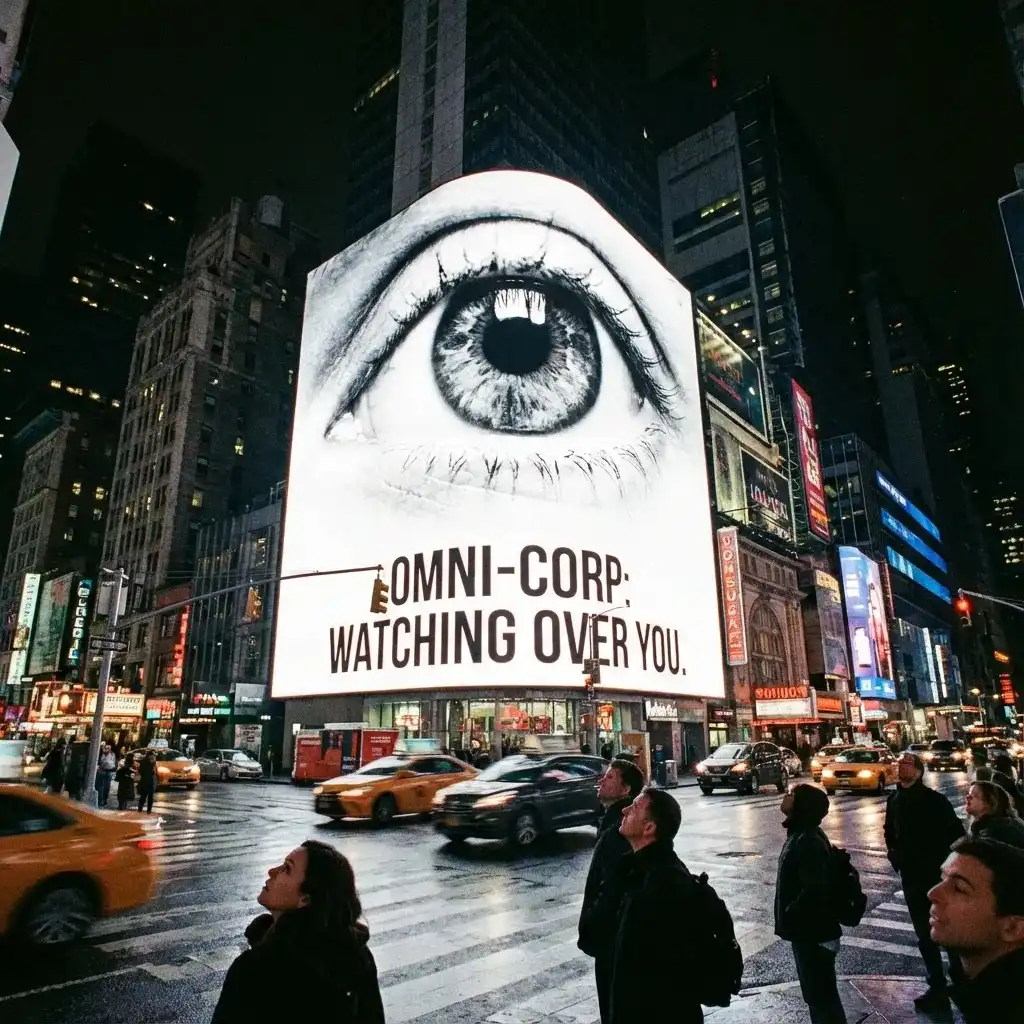
The Psychology of Outdoor Advertising: Why Our Brains Can't "Skip" Billboards
Every day, the average person is exposed to 4,000-10,000 ads. Most of them are instantly forgotten, skipped, or blocked entirely.
But billboards are different.
Unlike digital ads that can be closed, scrolled past, or blocked, outdoor advertising occupies physical space in the real world - making it impossible to ignore.
In this article, we explore the psychology behind outdoor advertising's unique power and why, in an age of digital overload, billboards remain one of the most effective advertising mediums.
🧠 The Science of Attention
Our brains are wired to notice things in our environment. This is a survival mechanism - we evolved to spot threats, food sources, and important changes around us.
Outdoor advertising taps into this instinct.
Key Psychological Principles:
| Principle | How OOH Applies |
|---|---|
| Peripheral Vision | Billboards enter our field of vision even when we're not looking directly at them |
| Size Bias | Larger objects are perceived as more important and trustworthy |
| Environmental Context | Ads in physical space feel more "real" than digital ones |
| Passive Processing | We absorb billboard messages even without active attention |
Unlike social media ads competing for attention on a 6-inch screen, billboards command the environment.
🚫 The "Unskippable" Advantage
Digital advertising has created a generation of expert ad-avoiders:
| Platform | Skip/Block Rate |
|---|---|
| YouTube Pre-Roll | 76% skip when possible |
| Display Ads | 30%+ use ad blockers |
| Social Feed Ads | <1 second average attention |
| Email Marketing | 80%+ unopened |
Outdoor advertising has no skip button.
When you drive past a billboard or walk through a mall, you see the ads. There's no ad blocker for the physical world.
🔄 Frequency Without Fatigue
One of the biggest problems in digital advertising is ad fatigue - when people see the same ad too many times and start to tune it out or feel annoyed.
Outdoor advertising experiences significantly less fatigue:
Why OOH Avoids Fatigue:
Natural Exposure: People pass the same billboard during regular routines (commutes, shopping), creating organic frequency.
Passive Processing: Because OOH doesn't demand active engagement, repeated exposure feels less intrusive.
Environmental Variety: Each time you see a billboard, the context is slightly different (weather, mood, companions), keeping the experience fresh.
No Tracking Anxiety: People don't feel "followed" by billboards like they do with retargeting ads.
Research shows: OOH needs 8-12 exposures to maximize recall, compared to just 3-5 for digital to trigger fatigue.
🎨 The Power of Physical Presence
There's something psychologically different about advertising that exists in space vs. on a screen:
Physical = Real
| Factor | Digital Ads | Outdoor Ads |
|---|---|---|
| Perceived Legitimacy | Lower | Higher |
| Brand Trust | Skepticism ("clickbait") | Authority ("established brand") |
| Memorability | Lower retention | Higher retention |
| Emotional Impact | Diminished by screen fatigue | Enhanced by environment |
Studies show people rate brands that advertise on billboards as more trustworthy than those that only advertise online.
📍 Location Creates Meaning
Where an ad appears shapes how it's perceived:
- A billboard near a luxury mall borrows prestige from the location
- Transit ads on metro routes reach urban professionals
- Screens in airports command premium attention
- Neighborhood billboards feel locally relevant
OOH doesn't just deliver reach - it delivers context.
This is called contextual priming: the environment shapes how the message is received.
🧪 The Memory Advantage
Studies on advertising recall consistently show OOH outperforming other channels:
| Metric | OOH | Digital Display | Social Media |
|---|---|---|---|
| Unaided Recall | 47% | 21% | 18% |
| Brand Recognition | 55% | 32% | 28% |
| Purchase Intent Lift | 24% | 12% | 10% |
Source: Aggregate of Nielsen, Kantar, and OAAA studies
Why? The combination of:
- Large format making deep visual impression
- Repeated exposure during daily routines
- Lack of competing content in the same space
🌟 Emotional Impact of Scale
Billboards are big. And size matters for emotional impact.
The "Awe Effect"
Large stimuli trigger what psychologists call the "awe response" - a feeling of being in the presence of something important.
- Giant screens in Times Square feel significant
- Building wraps create wonder
- Large highway billboards demand attention
This emotional response translates into brand perceptions:
"If they can afford that billboard, they must be a big, legitimate brand."
📱 OOH + Digital: The Best of Both Worlds
The smartest advertisers don't choose between outdoor and digital - they use them together:
| OOH Does | Digital Does |
|---|---|
| Broad awareness | Targeted reach |
| Brand building | Direct response |
| Emotional impact | Measurable conversions |
| Trust and credibility | Personalization |
Example Flow:
- Consumer sees billboard during morning commute → awareness
- Later sees retargeted mobile ad → reinforcement
- Clicks to website and converts → action
The billboard created the mental availability that made the digital ad effective.
💡 Practical Applications
How to leverage OOH psychology for your campaigns:
1️⃣ Embrace Simplicity
Billboards are seen in seconds. Use 7 words or fewer. Let the visual do the work.
2️⃣ Choose Locations for Context
Match your brand to environments that reinforce your positioning.
3️⃣ Plan for Frequency
OOH works through repetition. Book long enough durations for message absorption.
4️⃣ Go Big When Possible
Larger formats deliver outsized psychological impact.
5️⃣ Combine with Digital
Use OOH for awareness, then retarget digitally for conversion.
📊 Case Study: Brand Awareness Campaign
Objective: A new digital bank wanted to build trust and awareness.
Challenge: As an online-only brand, they lacked the "physical presence" that traditional banks have with branches.
Solution:
- Outdoor campaign across 50 high-impact locations in Mumbai and Delhi
- Messaging focused on security and trustworthiness
- Large-format billboards in premium business districts
Results:
| Metric | Before OOH | After OOH |
|---|---|---|
| Brand Awareness | 12% | 34% |
| Trust Score | 28/100 | 51/100 |
| App Downloads | Baseline | +45% |
| "Would Recommend" | 24% | 42% |
Physical advertising gave a digital brand the credibility of traditional institutions.
🏁 Conclusion
In a world of skippable, blockable, forgettable digital ads, outdoor advertising offers something increasingly rare: guaranteed attention in a trusted environment.
The psychology is clear:
- 👁️ You can't skip what's in your path
- 🧠 Large formats make lasting impressions
- 🔄 Physical space builds trust
- 💪 Frequency works without fatigue
With Adcentra.ai, you can harness the unique psychological power of outdoor advertising while adding the intelligence of digital planning and measurement.
👉 Ready to make an unskippable impression? Visit Adcentra.ai and create campaigns that truly capture attention.
💬 FAQs
1️⃣ Why can't people "skip" outdoor ads?
Billboards exist in physical space along daily routes. Unlike digital ads with skip buttons, outdoor ads are seen naturally as people move through their environment.
2️⃣ Does outdoor advertising build more trust than digital?
Research consistently shows that physical advertising formats are perceived as more legitimate and trustworthy than digital-only campaigns.
3️⃣ How many times should someone see my billboard?
Studies suggest 8-12 exposures for maximum recall. This is typically achieved through 2-4 weeks of display on daily commute routes.
Published by Adcentra.ai - Building the future of intelligent outdoor advertising in India.