

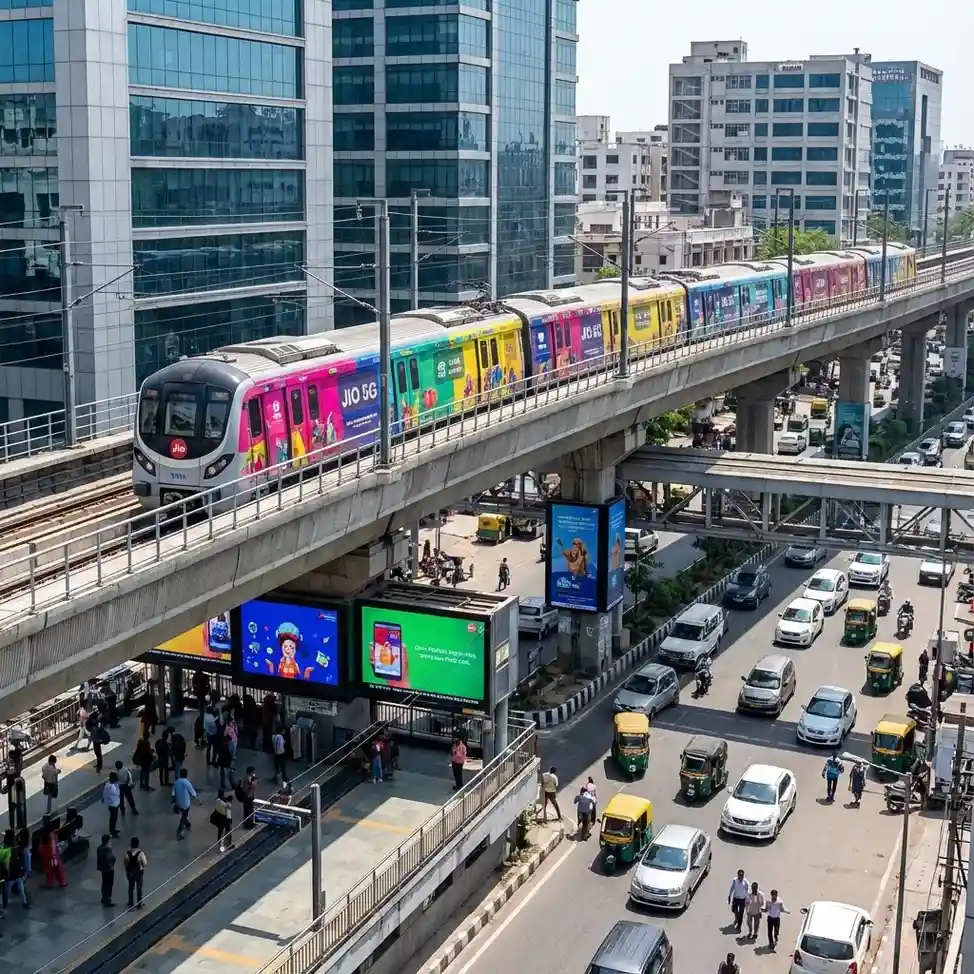
The Complete Guide to Transit Advertising in India
Every day, over 100 million Indians use public transit - metros, buses, trains, and auto-rickshaws.
This captive, commuting audience represents a massive opportunity for advertisers. Transit advertising reaches people during their daily routines, building frequency and familiarity that drives real results.
At Adcentra.ai, we help brands navigate the complex world of transit advertising across India's growing transportation networks.
🚇 Why Transit Advertising Works
The Commuter Advantage
| Factor | Impact |
|---|---|
| Daily Frequency | Same commuters see your ad 2x daily, 5 days a week |
| Captive Audience | Limited distractions during travel time |
| Dwell Time | 20-45 minutes average journey duration |
| Consistent Reach | Predictable, routine exposure |
| Broad Demographics | Reaches all income levels and age groups |
| Urban Concentration | Targets city centers and commercial districts |
The Numbers
| Transit Mode | Daily Riders (Est.) | Key Markets |
|---|---|---|
| Metro | 10+ million | Delhi, Mumbai, Bangalore, Chennai, Hyderabad, Kolkata |
| Buses | 70+ million | All major cities |
| Suburban Rail | 15+ million | Mumbai, Chennai, Kolkata |
| Auto/Cab | 20+ million | Pan-India |
🚇 Metro Advertising
Metro systems are the premium segment of transit advertising, offering modern infrastructure and affluent commuters.
Available Inventory
| Location | Format | Impact |
|---|---|---|
| Station Entrances | Large digital screens, pillars | High visibility, mass reach |
| Platforms | Backlit panels, digital totems | Captive waiting audience |
| Train Exteriors | Full wrap, partial wrap | Moving billboard across city |
| Train Interiors | Overhead panels, door graphics, digital screens | Extended dwell time |
| Escalators/Elevators | Wall panels, step graphics | Forced viewing |
| Corridors | Long format walls, pillar wraps | High frequency |
Metro Networks in India
| City | Launch | Current Stations | Daily Ridership |
|---|---|---|---|
| Delhi Metro | 2002 | 250+ | 6+ million |
| Mumbai Metro | 2014 | 40+ (growing) | 700k+ |
| Bangalore Metro | 2011 | 65+ | 700k+ |
| Chennai Metro | 2015 | 45+ | 200k+ |
| Hyderabad Metro | 2017 | 55+ | 400k+ |
| Kolkata Metro | 1984 | 35+ | 600k+ |
Targeting by Station
Different stations attract different audiences:
| Station Type | Audience | Best Categories |
|---|---|---|
| IT Corridors | Tech professionals | Apps, electronics, B2B |
| Commercial Hubs | Business workers | Finance, insurance, services |
| Residential Areas | Families, students | FMCG, education, retail |
| Tourist Spots | Visitors | Hospitality, F&B, attractions |
| Airports | Travelers | Travel services, premium brands |
🚌 Bus Advertising
Bus advertising offers the widest reach and most affordable entry point into transit media.
Format Types
| Format | Description | Best For |
|---|---|---|
| Full Bus Wrap | Complete exterior coverage | High-impact launches |
| Back Panel | Rear of bus | Following traffic exposure |
| Side Panel | Long side banners | Extended messaging |
| King/Queen Size | Large side panels | Balance of reach and cost |
| Interior Panels | Ceiling/wall ads inside | Captive passengers |
| Bus Shelter | Waiting area displays | Pedestrian + commuter reach |
Strategic Advantages
- Route Selection: Target specific neighborhoods and corridors
- Broad Coverage: Reach beyond metro lines
- Lower Cost: More accessible than rail advertising
- Mobility: Your message travels through the city
- Frequency: Same routes run repeatedly
Pricing Guide (Approximate)
| Format | Major Metro (Monthly) | Tier 2 City (Monthly) |
|---|---|---|
| Full Wrap | ₹50k-1 lakh | ₹25k-50k |
| Back Panel | ₹15k-30k | ₹8k-15k |
| Bus Shelter (Static) | ₹10k-25k | ₹5k-12k |
| Bus Shelter (Digital) | ₹30k-75k | ₹15k-35k |
🚆 Railway Advertising
With 8 billion+ passenger journeys annually, Indian Railways is the world's largest transit network.
Inventory Types
| Location | Format | Audience |
|---|---|---|
| Station Facades | Building wraps, large displays | Mass arrivals/departures |
| Platforms | Pillars, benches, digital screens | Waiting passengers |
| Foot Overbridges | Wall panels, step branding | High footfall connectors |
| Train Exteriors | Coach wraps (limited) | Long-distance visibility |
| Train Interiors | Berth panels, vestibule areas | Captive journey time |
| Pantry Cars | Table ads, branding | Dining passengers |
Key Station Categories
| Category | Examples | Best For |
|---|---|---|
| A1 Stations | New Delhi, Mumbai CST, Howrah | Mass reach, national brands |
| A Stations | Major junctions | Regional campaigns |
| B/C Stations | Smaller cities | Local advertisers |
| Suburban Stations | Mumbai locals, Chennai EMU | Daily commuter targeting |
🛺 Auto-Rickshaw and Cab Advertising
The last-mile transit segment offers unique hyperlocal reach.
Formats
| Type | Description | Reach |
|---|---|---|
| Auto Hood Branding | Top hood wrap | Pedestrians, other vehicles |
| Auto Back Panel | Rear advertising | Following traffic |
| In-Cab Screens | Digital displays in Ola/Uber | Captive passengers |
| Seat Back Ads | Physical panels | Direct passenger exposure |
Advantages
- Hyperlocal: Operates in specific neighborhoods
- Street-Level: Visible to pedestrians
- Affordable: Low cost per vehicle
- Fleet Scale: Book hundreds of vehicles for city-wide reach
📊 Planning a Transit Campaign
Step 1: Define Audience
| Question | Why It Matters |
|---|---|
| Who are they? | Demographics guide mode selection |
| Where do they travel? | Routes and stations targeting |
| When do they commute? | Dayparting and frequency |
| What's their mindset? | Creative messaging approach |
Step 2: Select Modes
| Objective | Best Transit Mode |
|---|---|
| Premium urban reach | Metro |
| Mass market coverage | Buses |
| Long-distance travelers | Railways |
| Hyperlocal neighborhood | Autos/cabs |
| Multi-city launch | Combination |
Step 3: Choose Locations
| Criterion | Consideration |
|---|---|
| Footfall | Stations/routes with highest traffic |
| Context | Match location to brand positioning |
| Competition | Clutter level in the space |
| Visibility | Sightlines and dwell opportunities |
Step 4: Design for Transit
| Principle | Application |
|---|---|
| Simplicity | 3-5 second read time |
| Contrast | High visibility in busy environments |
| Hierarchy | Brand first, then message |
| Durability | Materials that withstand transit conditions |
💡 Case Study: E-Commerce Delivery App
Objective: Drive app downloads among daily commuters.
Strategy:
- Mode: Delhi Metro + bus shelters near metro stations
- Locations: 25 high-traffic stations along Blue and Yellow lines
- Format: Platform digital screens + escalator panels
- Creative: Dynamic countdown to delivery ("Order now, delivered by 8 PM")
- Duration: 8 weeks
Results:
| Metric | Outcome |
|---|---|
| Daily Impressions | 15+ million |
| QR Code Scans | 45,000 |
| App Downloads | 28,000 attributed |
| Cost Per Download | ₹95 |
| Area Order Increase | +35% in campaign zones |
📈 Measurement Approaches
| Metric | How to Measure |
|---|---|
| Reach | Transit authority ridership data |
| Frequency | Route/line repeat exposure modeling |
| Engagement | QR scans, unique URLs, promo codes |
| Brand Lift | Commuter surveys |
| Sales Impact | Store visits, geo-targeted sales |
| Digital Attribution | Mobile retargeting of transit commuters |
🏁 Conclusion
Transit advertising offers unparalleled access to India's moving millions - from metro professionals to bus commuters to railway travelers.
The combination of:
- 📍 Captive audiences with extended dwell times
- 🔄 Daily frequency through routine exposure
- 💰 Scalable costs from hyperlocal to national
- 📊 Growing digital inventory for programmatic buying
...makes transit OOH essential for any brand targeting urban India.
👉 Ready to reach commuters?
Visit Adcentra.ai and explore transit advertising options across India.
💬 FAQs
1️⃣ What's the minimum budget for transit advertising?
Entry points vary: auto branding from ₹500/vehicle/month, bus shelter from ₹5,000/month, metro from ₹50,000+/month depending on the city and format.
2️⃣ How long should a transit campaign run?
Minimum 4 weeks recommended for frequency building. 8-12 weeks is optimal for significant brand lift.
3️⃣ Can I target specific metro lines or bus routes?
Yes! Most transit advertising allows route and station-level selection, enabling precise geographic targeting.
Published by Adcentra.ai - Building the future of intelligent outdoor advertising in India.